
Hanwha Ocean and ABB Plan Floating Data Centers: Why Proven Power Platforms Matter
Hanwha Ocean and ABB signed a pact on 5 November 2026 to develop floating data centers — and the power behind them will come from proven platforms, not new inventions.
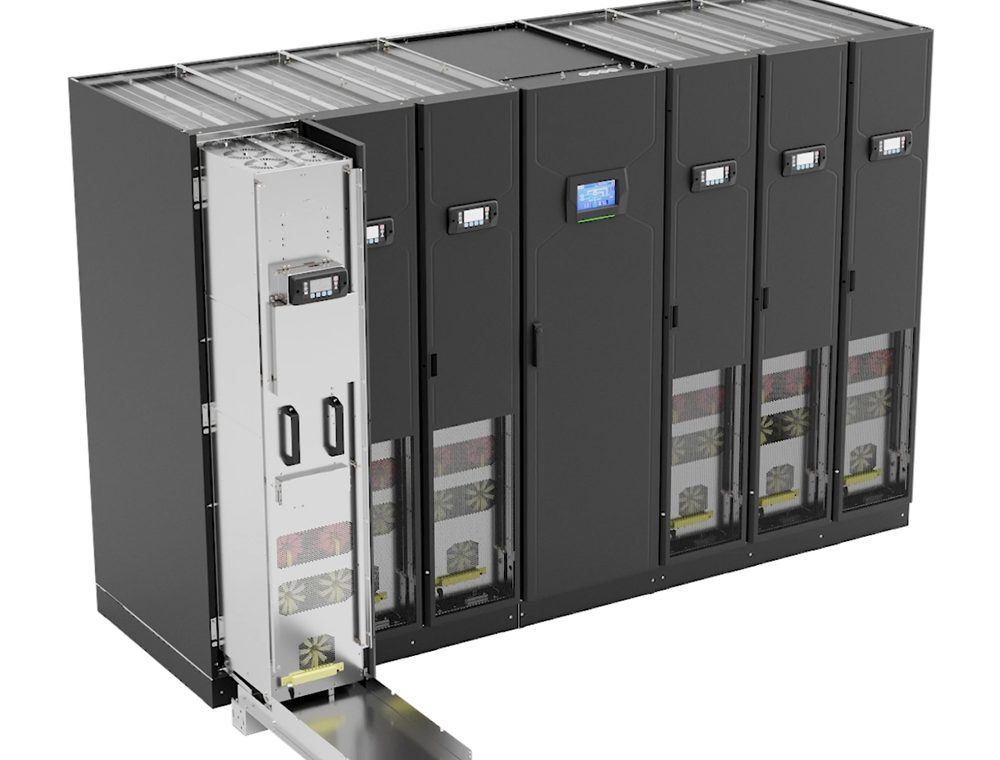
ABB MegaFlex DPA UPS power module (ABB official image). The floating data center project has not named any ABB product; the MegaFlex is shown as the same kind of mature power-protection platform discussed in this article.
Key takeaways
- On 5 November 2026, Hanwha Ocean and ABB signed a memorandum of understanding (MOU) to jointly develop the power and control systems for floating data centers (FDCs), with the work running through May 2027. [1][2]
- The split is clear: Hanwha Ocean leads the basic design and the design criteria for LNG engine-based power generation; ABB reviews power system reliability and power quality, and develops the control technology that adjusts LNG engine output as AI workloads swing. [1]
- This is a joint-development MOU, not a supply contract — and no ABB product series has been named anywhere in the agreement or its coverage. [1]
- Our judgement: whatever an FDC ends up running on, its power base will sit on the same kind of mature platforms ABB already sells into data centers and offshore installations — medium-voltage distribution in the UniGear class and UPS power protection in the MegaFlex class. [6][7]
- For owners and stockists of ABB power equipment, the practical read is about service life: if floating data centers become a real market, the installed base — and the spares and service demand — of mature ABB power platforms gets a longer runway.
Who signed, and what they actually agreed to
Hanwha Ocean, the South Korean shipbuilder and offshore engineering company, signed a memorandum of understanding for a joint development project with ABB, the global electrification and automation company, on 5 November 2026. The subject is the power and control system of Hanwha Ocean's floating data center (FDC) — a data center built on a floating offshore structure, with servers, power and cooling equipment on board. [1][2]
The signing was attended on the Hanwha side by Heo Yoon, executive vice president and head of its Product Strategy and Technology Institute, and on the ABB side by Masayasu Ishikawa, head of ABB's Asia-Pacific distribution solutions division. [5]
Two things about the deal matter more than the headline. First, it is a joint-development MOU: the two companies will review power system designs and develop operating and control technologies together through May 2027, aiming at stable power supply and efficient operation. [2][3] Second, it names no products. No ABB switchgear line, no UPS range, no drive family appears in the agreement or in any of the coverage we checked. Anyone describing this as an order for specific ABB equipment is reading something that is not there.
Hanwha Ocean brings the hull; ABB brings the power system
Hanwha Ocean's contribution is the marine side. It developed its floating data center model in-house and unveiled it at Gastech 2026, the gas industry exhibition held in September 2026. [2][4] Its 60 MW floating data center concept design had previously received approval in principle (AiP) from the American Bureau of Shipping (ABS), according to Korean media reports. [2]
ABB's contribution is the electrical side. ABB supplies power distribution and management systems and industrial automation, and in the data center sector it provides power management and control technology aimed at reliable supply and energy efficiency. [3] That is the pairing the MOU is built on: Hanwha Ocean extends its offshore plant design and construction capability into digital infrastructure, and ABB brings its data center power experience into a marine environment. [1]
The problem they are jointly trying to solve is specific. AI data centers can experience rapid fluctuations in power demand during computing operations, and on a floating platform there is no grid to absorb the swing. The two companies will develop technology to adjust LNG engine output in response to those changes and keep power equipment running stably, plus integrated control technology that links power generation equipment with the power system. [1][2]
The work plan, in plain terms
| Workstream | Who | What the agreement says |
|---|---|---|
| Basic design and power system configuration | Hanwha Ocean | Lead the basic design of the FDC and the configuration of its power system [1] |
| LNG power generation design criteria | Hanwha Ocean | Establish design criteria for LNG engine-based power generation facilities [1] |
| Equipment layout for offshore conditions | Hanwha Ocean | Assess equipment layouts and suitability for offshore conditions [1] |
| Reliability and power quality review | ABB | Analyse power system reliability and power quality based on Hanwha Ocean's design [1] |
| Efficiency review | ABB | Conduct technical reviews to improve operational efficiency [1] |
| Load-following and integrated control | ABB | Develop technology to adjust LNG engine output as AI demand fluctuates, and integrated control of generation equipment and power systems [1] |
| Timeline | Both | Joint design reviews and control-technology development through May 2027, targeting stable power supply and efficient operation [2][3] |
The power base will be built on proven platforms, not invented from scratch
Here is where fact ends and judgement begins — and the distinction matters. No source says which ABB equipment an FDC would use. But the kind of equipment it needs is not a mystery: medium-voltage distribution that already works in data centers and offshore, and UPS power protection built for AI-scale loads. ABB has both, in platforms that have been in the market for years. That is the basis for the comparison below: these are the same kind of mature platforms, not named selections.
| Platform (same kind of technology, not a named selection) | What ABB's own pages say | Why it is relevant to an FDC |
|---|---|---|
| UniGear ZS1 medium-voltage switchgear | Air-insulated switchgear up to 24 kV, with withdrawable VD4 circuit breaker; main busbar current up to 4000 A; short-time current up to 63 kA; on the market for more than 25 years, with over 750,000 panels installed worldwide [6] | ABB's own list of typical applications for the ZS1 names data centers, off-shore platforms, power generation stations and marine in the same breath [6] |
| MegaFlex DPA UPS | Modular UPS from 1000 kW to 2000 kW for hyperscale, colocation and neocloud data centers; AI-ready power protection; VFI efficiency up to 97.6%; universal voltage 380–480 V; 15-year design life; SmartTracker remote monitoring [7] | Built for the exact load profile an FDC faces: AI workloads that swing fast, in a facility that cannot lean on a grid connection [7] |
The point for readers who own or stock ABB equipment is not that a floating data center will order a ZS1 panel or a MegaFlex module tomorrow. It is that the platforms an FDC would need already exist, already serve both data centers and marine environments, and already have large installed bases with long service lives. A new market that draws on mature platforms extends those platforms' relevance rather than replacing them.
Why this matters beyond the headline
Land-based data centers compete for two scarce things: sites and grid capacity. Floating data centers are interesting precisely because they sidestep both — but they trade those problems for a harder one. A floating facility has to generate its own power and keep it stable while AI loads swing, with no grid to smooth the edges. That is why the Hanwha–ABB work plan centres on LNG engine output tracking and integrated control, not on the servers themselves.
Our view is that the first mover advantage here belongs to whoever solves the load-following problem first. If LNG generation can be made to follow AI demand closely enough, floating data centers become a credible answer to the land and power constraints that now cap data center growth. If it cannot, the concept stays a model on an exhibition floor. The MOU runs to May 2027, so the first real evidence — design reviews, control-technology results, or a move from development to orders — should surface within that window.
For the spares and service market, the implication is narrower but concrete. Mature ABB power platforms already have installed bases measured in hundreds of thousands of panels and in data centers worldwide. A floating data center market, if it materialises, adds a new demand stream for the same kind of distribution and power-protection equipment, and stretches the service and spares horizon of platforms that are already in production. That is a reason to watch the programme's milestones, not a reason to stock up on the strength of one announcement.
What to watch if you own or stock ABB power equipment
If you are an engineer:
- Watch for the May 2027 milestone: whether the joint work produces published design reviews, a control-technology result, or a move toward orders. [2][3]
- Do not spec an FDC around any ABB model yet — nothing has been named, and the MOU is a development agreement, not a bill of materials. [1]
- If you already run UniGear-class switchgear or MegaFlex-class UPS, note the overlap: the same platforms serve data centers and marine installations, so spares and service knowledge transfer between the two. [6][7]
If you plan purchasing or spares:
- Treat this as a demand signal to monitor, not a buying trigger. No orders exist, and no product has been selected. [1]
- Keep an eye on ABB's distribution and critical-power ranges — the ABB brands page lists what INDPRT sources — and on the installed ABB platforms already in your fleet. ABB's own lifecycle notes on the ACS310/ACS355 drives, which go obsolete on 1 January 2027, and on the DCS800, which enters its Limited phase the same day, are a reminder that mature platforms have their own timelines: see our notes on the ACS310 and ACS355 and the DCS800.
- If you need a quote for ABB power or distribution equipment, or for spares for installed units, send the full part list through our RFQ page — one list, one quote.
FAQ
Will a floating data center use UniGear ZS1 or MegaFlex DPA?
Nobody has said so. The MOU and its coverage name no ABB product series at all. UniGear ZS1 and MegaFlex DPA are the same kind of mature platforms — medium-voltage distribution and UPS power protection — that an FDC would need, and both already serve data centers and marine environments. That is a judgement about the technology class, not a statement about what will be installed. [1][6][7]
Is this a supply contract?
No. It is a memorandum of understanding for a joint development project: design reviews and control-technology development through May 2027. There is no order, no named equipment and no delivery schedule. [1][2]
What should spares planning do now?
Nothing urgent. The practical step is to watch the programme's milestones to May 2027 and to keep mature ABB power platforms — the ones already installed in data centers and marine settings — on your spares radar, because a floating data center market would extend their service horizon rather than shorten it.
Sources
[1] Assafina, "Hanwha Ocean and ABB to Advance Core FDC Technologies," 6 November 2026. https://www.assafinaonline.com/en/article/Hanwha-Ocean-and-ABB-to-Advance-Core-FDC-Technologies
[2] Aju Press, "Hanwha Ocean Partners with ABB to Enhance Floating Data Center Technology," 5 November 2026. https://www.ajupress.com/view/20261105135270826
[3] The Elec, "Hanwha Ocean, ABB to Develop Floating Data Center Technology," 6 November 2026. https://www.thelec.net/news/articleView.html?idxno=15356
[4] The Seoul Economic Daily, "Hanwha Ocean, ABB Sign MOU on Floating Data Center Technology," 5 November 2026. https://en.sedaily.com/finance/2026/11/05/hanwha-ocean-abb-sign-mou-on-floating-data-center-technology
[5] Asiae (The Asia Business Daily), "Keeping AI Running Steadily Through Power Swings... Hanwha Ocean Advances Offshore Data Center Technology," 5 November 2026. https://www.asiae.co.kr/en/article/yeongnam/2026110515261238397
[6] ABB, UniGear Portfolio (official product page). https://www.abb.com/global/en/areas/electrification/medium-voltage/switchgear/air-insulated/unigear
[7] ABB News Center, "ABB expands MegaFlex DPA UPS range for Next-Gen data centers." https://new.abb.com/news/detail/134362/abb-expands-megaflex-dpa-ups-range-for-next-gen-data-centers
Need help finding a part?
Send your model and quantity. Our team aims to reply promptly during office hours.